
The mistake is teaching them in alphabet order
Short e and short i are the two vowels children confuse most, and they sound closest together. Teaching a, e, i back to back puts the two hardest sounds side by side in the same week. This pack still prints in alphabet order so it is easy to find a page, but the cover tells you the order to actually work in — a, then o, then i, then u, with e last.
Why a page of all one vowel proves nothing
If every answer on the page is a, a child works that out by question three and stops listening to the vowel entirely. She will finish the sheet with full marks and no new skill. That is why each vowel gets a second page that mixes in contrast words, and why the last page in the pack throws all five vowels together with no clue which is which. The mixed review is the only page here that genuinely tests anything; the rest are practice.
What each vowel gets
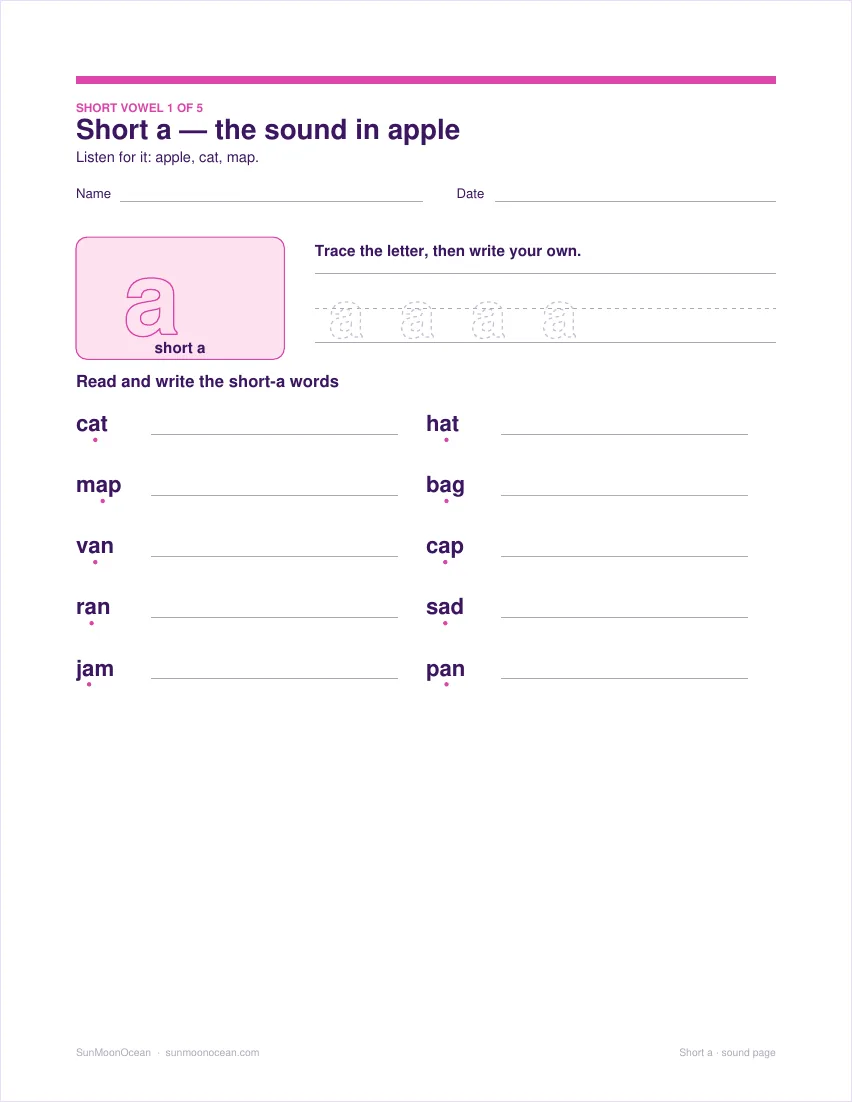
The first page is the sound itself: a large traceable letter, ruled rows, and ten short-vowel words to read and copy. The second page applies it — three fill-the-vowel sentences, a word family strip where only the first letter changes (cat, hat, bat, mat), and a two-column sort where she has to decide which words from the bank actually contain the sound.
Say the sound, not the letter
The single most useful thing an adult can do with this pack is say “/a/” as in apple rather than “ay”. Letter names are the thing children reach for when they are stuck, and letter names do not help you read a word. If she says “see-ay-tee” and then looks at you hopefully, model the three sounds slowly and then say the word fast. The fast repeat is what makes it click.