STEM Toys That Actually Teach Something

Sorted by the concept, not by the age. Every pick below is here because there's a specific thing being learned — and because we can tell you what question to ask while she's playing with it.

Buying guide · STEM · Parent-focused

"STEM" is now a sticker. It goes on the box because it moves the box, and it has been applied to things that are, on inspection, a plastic animal in a bag. That's not a scandal — it's just marketing — but it does mean the label has stopped carrying information, and a parent standing in front of a shelf has no way to sort the real ones from the stickered ones.

So here's the sort we use, and it has nothing to do with the word on the box.

The one question that separates them

Can she get a result you didn't plan for?

That's it. A toy where every outcome is in the instruction booklet is a craft activity with a lab coat on. The child follows twelve steps, the volcano erupts, everyone claps, and the thing that was practised was following twelve steps. Useful! Not science.

A real one has a space in it where she can try something nobody suggested and find out what happens. The volcano kit becomes science the moment she asks what happens with twice the vinegar and you say "let's find out" instead of "that's not in the instructions."

Three more tells

It fails visibly. If a thing can only work, there's nothing to diagnose, and diagnosis is most of what science actually is. Good STEM toys break in ways she can see and reason about.

The interesting part isn't the electronics. A lot of "STEM" is a normal toy with a microchip that does the interesting bit on the child's behalf. Watch for what's happening in her hands versus in the circuit board.

It survives being wrong. Materials that get consumed by a failed attempt quietly teach children not to attempt. The best ones let her be wrong ten times for free.

How to play alongside without turning it into a lesson

The fastest way to kill a STEM toy is to start teaching. The moment it becomes a lesson, she's performing for you rather than investigating, and performance and investigation look similar for about four minutes before one of them stops.

What works instead is asking questions you don't know the answer to — and meaning it. What do you think happens if… is a good one. That's odd, why did that one fall over and not that one? is better. Best of all is being visibly wrong yourself: guess out loud, be incorrect, and let her catch you. A child who has watched her dad be wrong about something and find it interesting rather than embarrassing has learned the single most important thing on this page, and no toy is required for it.

Each pick below has a "what to ask" line built into it. Use one, not all of them, and not every time.
Affiliate disclosure: As an Amazon Associate, SunMoonOcean earns from qualifying purchases made through the links on this page, at no extra cost to you.
Structures & forces — the earliest engineering

Why things stand up, and why they fall over

Load, balance, friction and momentum. These start working from three and stay interesting long after she can explain them.

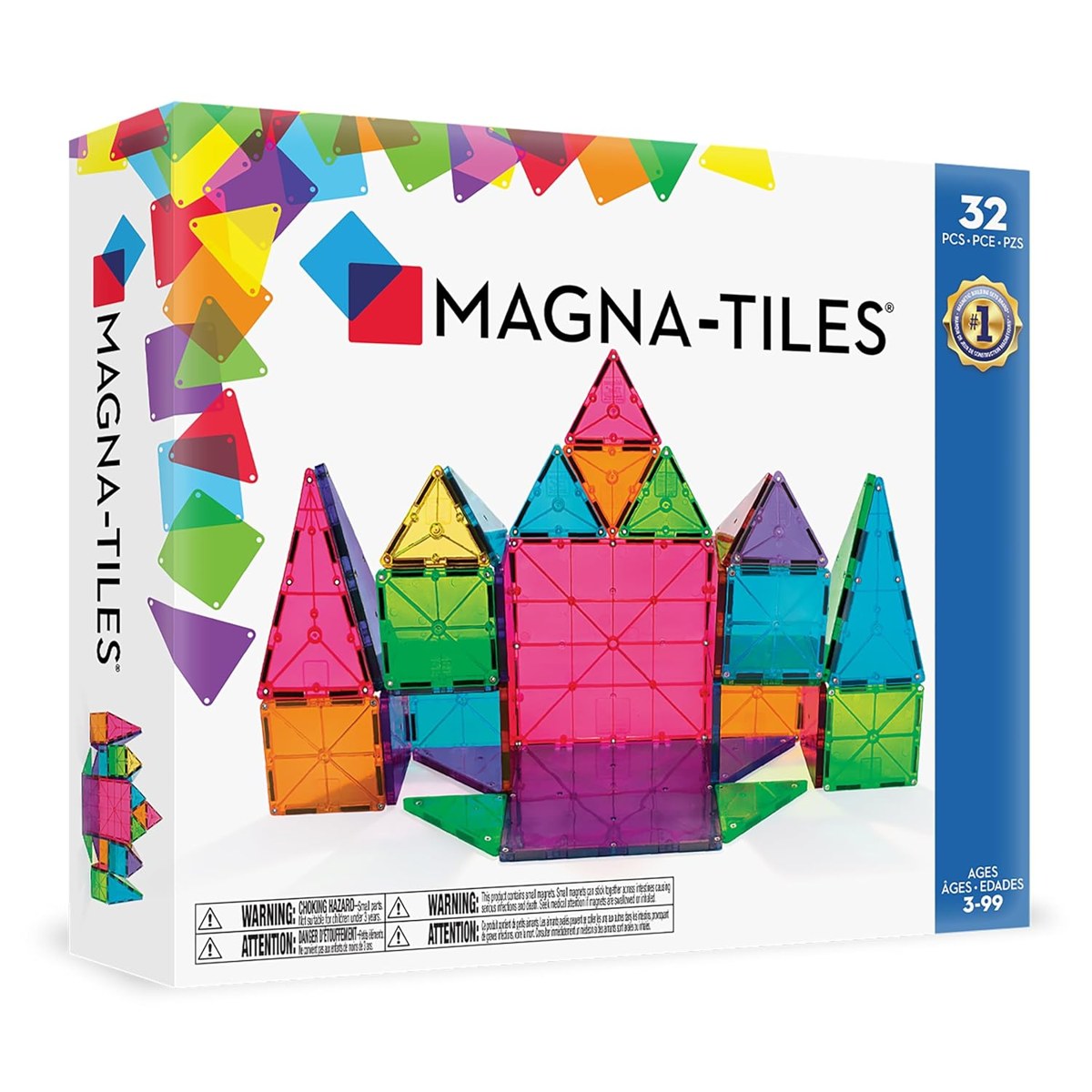
Translucent magnetic building tiles assembled into a structure
Sun · Structures

Magna-Tiles Classic Set

Ages 3+

The concept is structural load, and the reason this is the best introduction to it is that failure is instant, obvious, and free. A tower that's too narrow falls over. She rebuilds it wider. Nobody explained anything and she now knows something about base area. The squares and triangles also do quiet geometry work — she'll discover which shapes make a closed solid by running out of tiles that fit, which is a better lesson than being told.

What to ask: "Can you make one that survives if I nudge the table?"

View on Amazon

Affiliate link · #ad

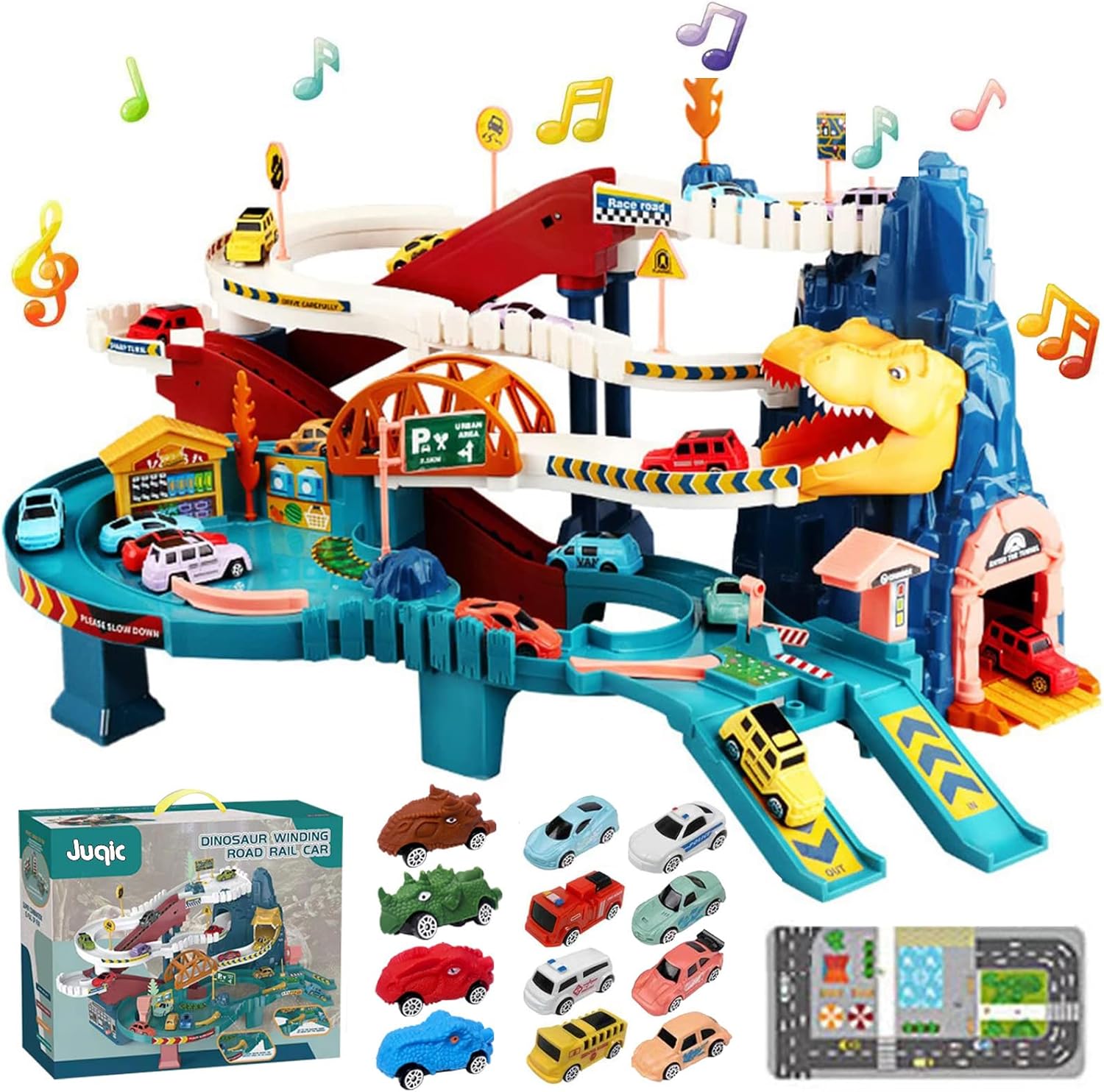
Dinosaur ramp track with cars rolling down the slope
Sun · Forces

Dinosaur Car Ramp

Ages 3+

The entry point on this whole page, and worth taking seriously despite looking like the least scientific thing here. A three-year-old repeating a ramp two hundred times is running the same experiment two hundred times and confirming the result — which is genuinely what a control condition is for, even if nobody involved would put it that way. The variable she'll find on her own is which car is fastest, and that's the first hypothesis she'll ever test.

What to ask: "Which one do you think wins? Let's do it three times and check."

View on Amazon

Affiliate link · #ad

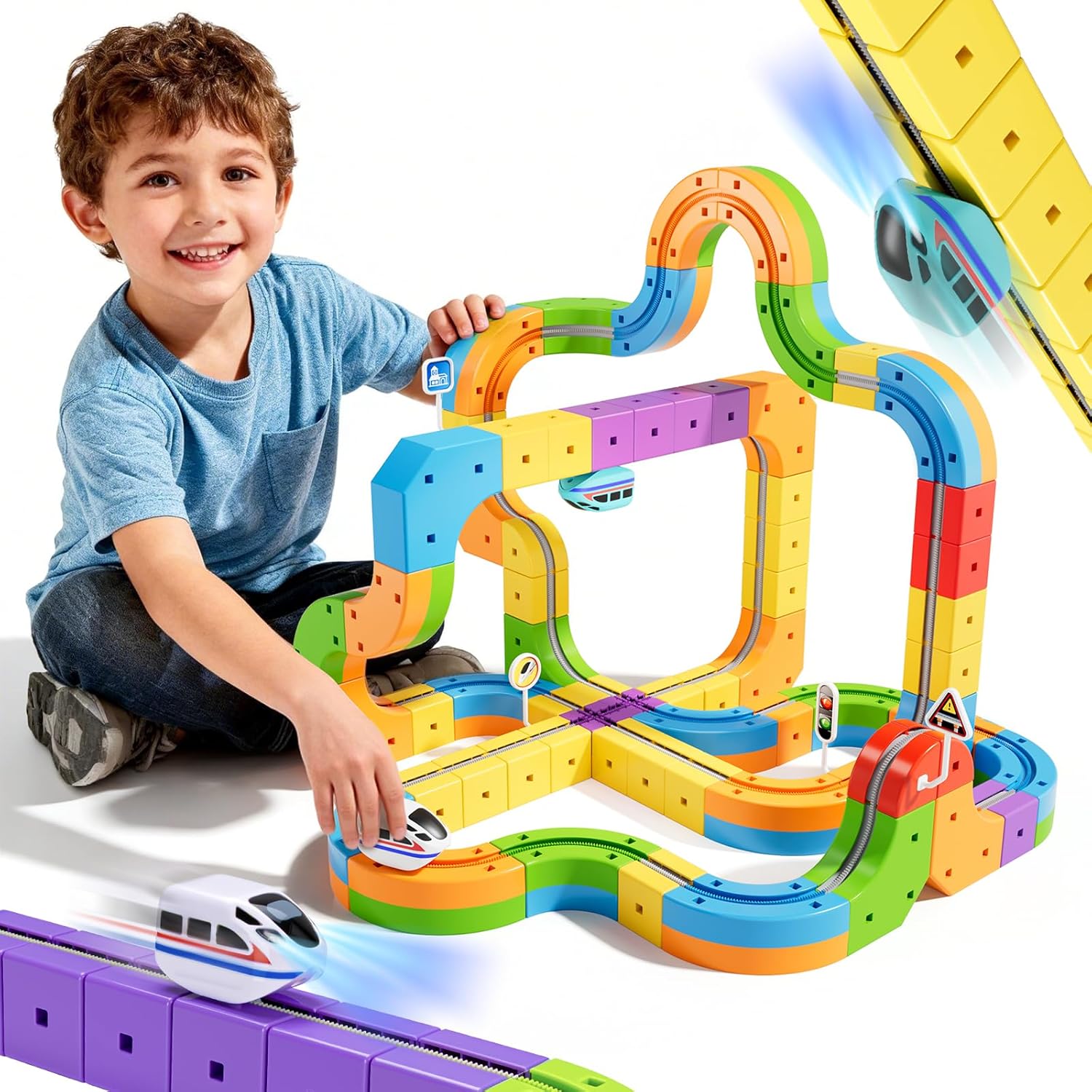
Anti-gravity car climbing a vertical wall surface
Sun · Forces

Gravity Track Car

Ages 5+

A car that climbs a wall is a violated expectation, and violated expectations are the cheapest way to buy a child's attention. The real science starts about ten minutes later, when she starts hunting for surfaces where it fails — brick, curtains, a rug. Building a mental map of "smooth and flat works, textured doesn't" is her deriving a rule about surface contact from evidence, unprompted, which is exactly the process the sticker on the box is claiming to sell.

What to ask: "Find me a wall where it doesn't work. Why that one?"

View on Amazon

Affiliate link · #ad

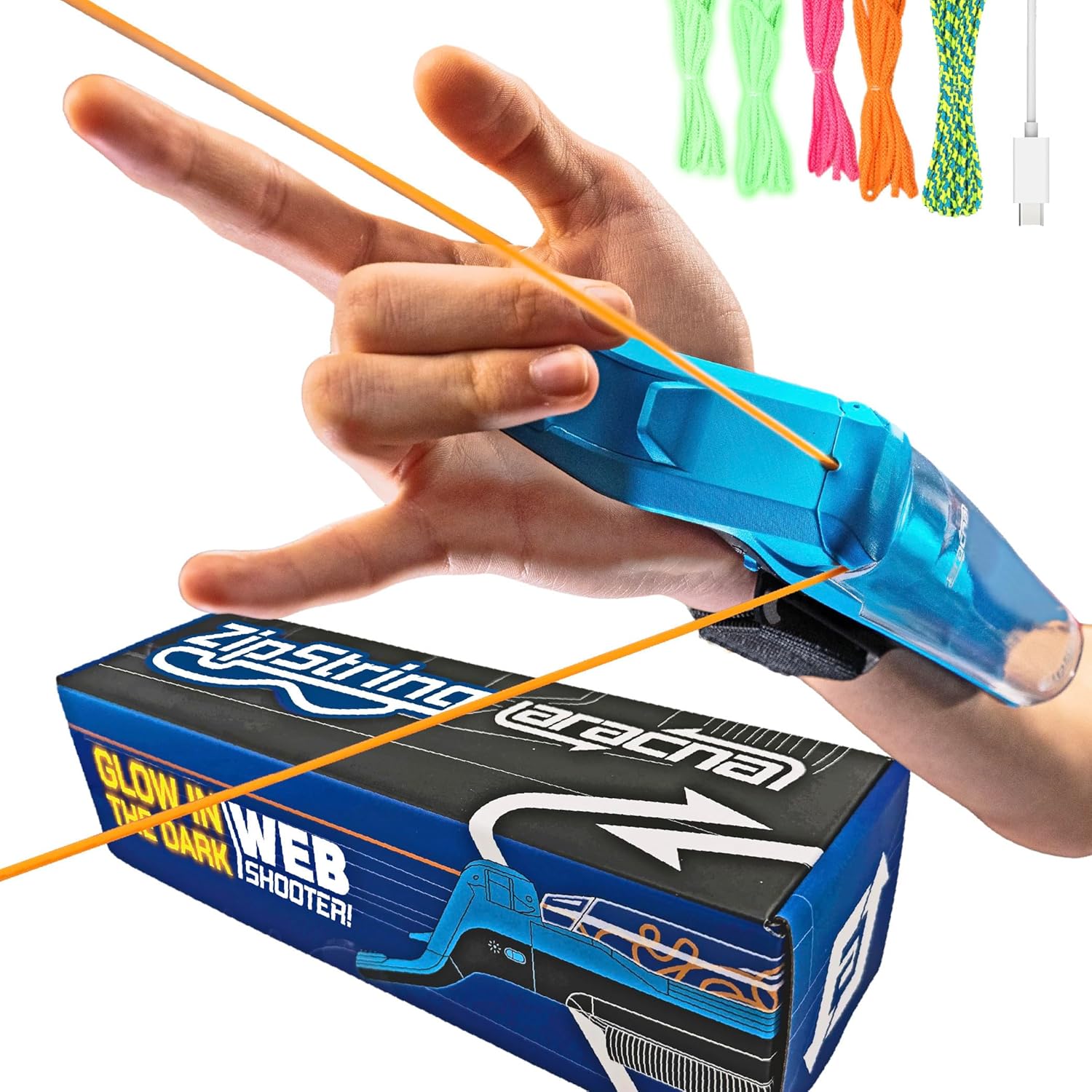
ZipString device driving a continuous loop of glowing string
Sun · Forces

ZipString Webshooter

Ages 8+

A closed loop of string held up by nothing but its own speed — this is tension and momentum made visible, and it's genuinely strange to watch even as an adult. It rewards the top of the age range because it's finicky: too slow and it collapses, and the child who works out that the loop needs speed to keep its shape has understood something real about rotating systems. Steering it by tilting is the second, harder skill.

What to ask: "What's actually holding the string up? What happens if it slows down?"

View on Amazon

Affiliate link · #ad

Materials & making — chemistry and design

Changing what something is

The disciplines where the output is a physical object she made. Messier, slower, and the ones most likely to produce a result nobody planned.

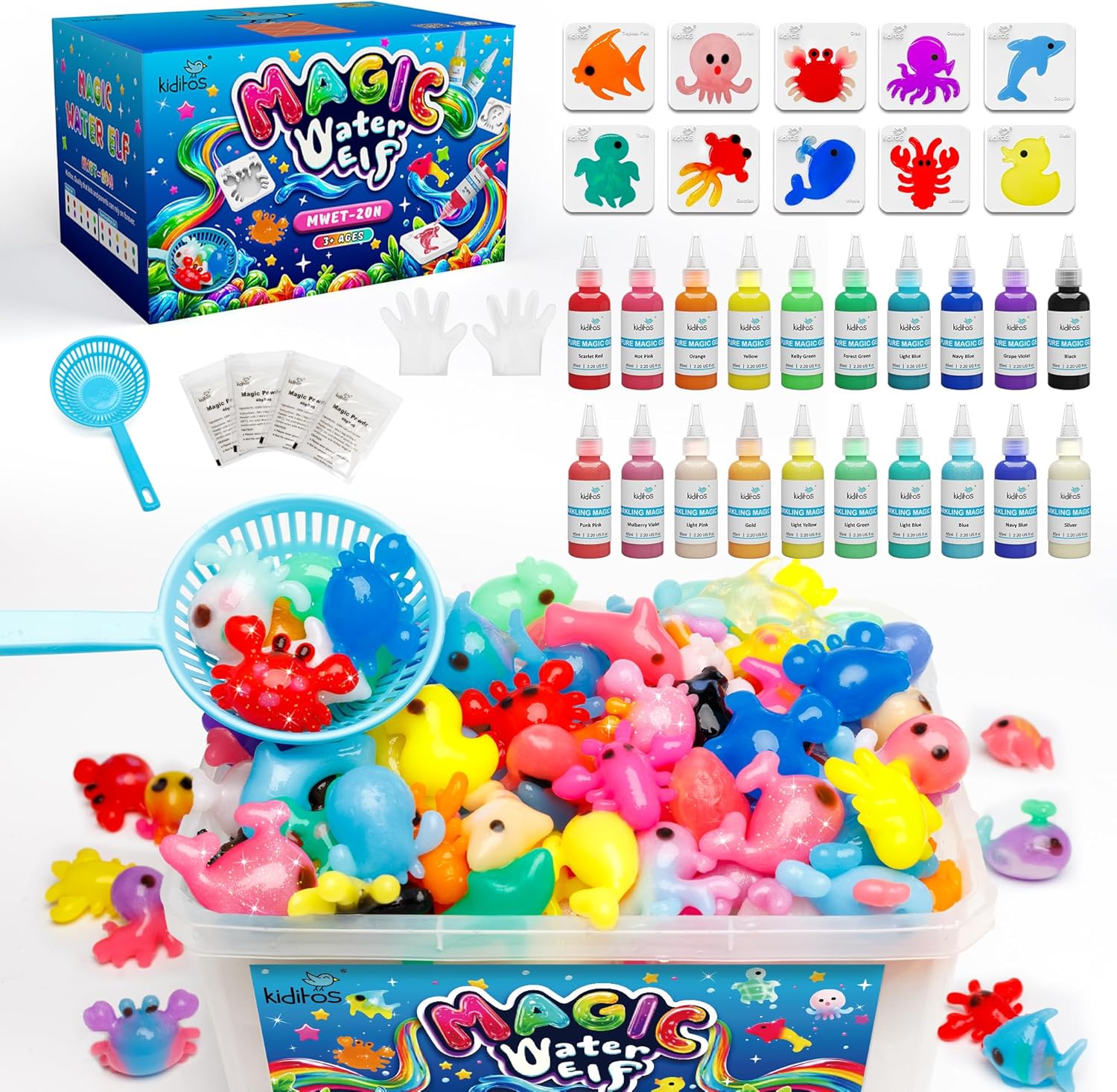
Water elf kit forming squishy shapes in a bowl of water
Sun · Chemistry

Water Elf Toy Kit

Ages 4+

A liquid becomes a solid when it touches another liquid, which to a five-year-old is indistinguishable from magic and to a nine-year-old is a genuine question. This is the only chemistry on the page and it earns its place by being reversible enough to run repeatedly and cheap enough that failed blobs don't matter. The good experiment is deliberate: change one thing — how fast she pours, how deep, how long it sits — and see what it does to the shape.

What to ask: "Change one thing, only one, and tell me what you changed."

View on Amazon

Affiliate link · #ad

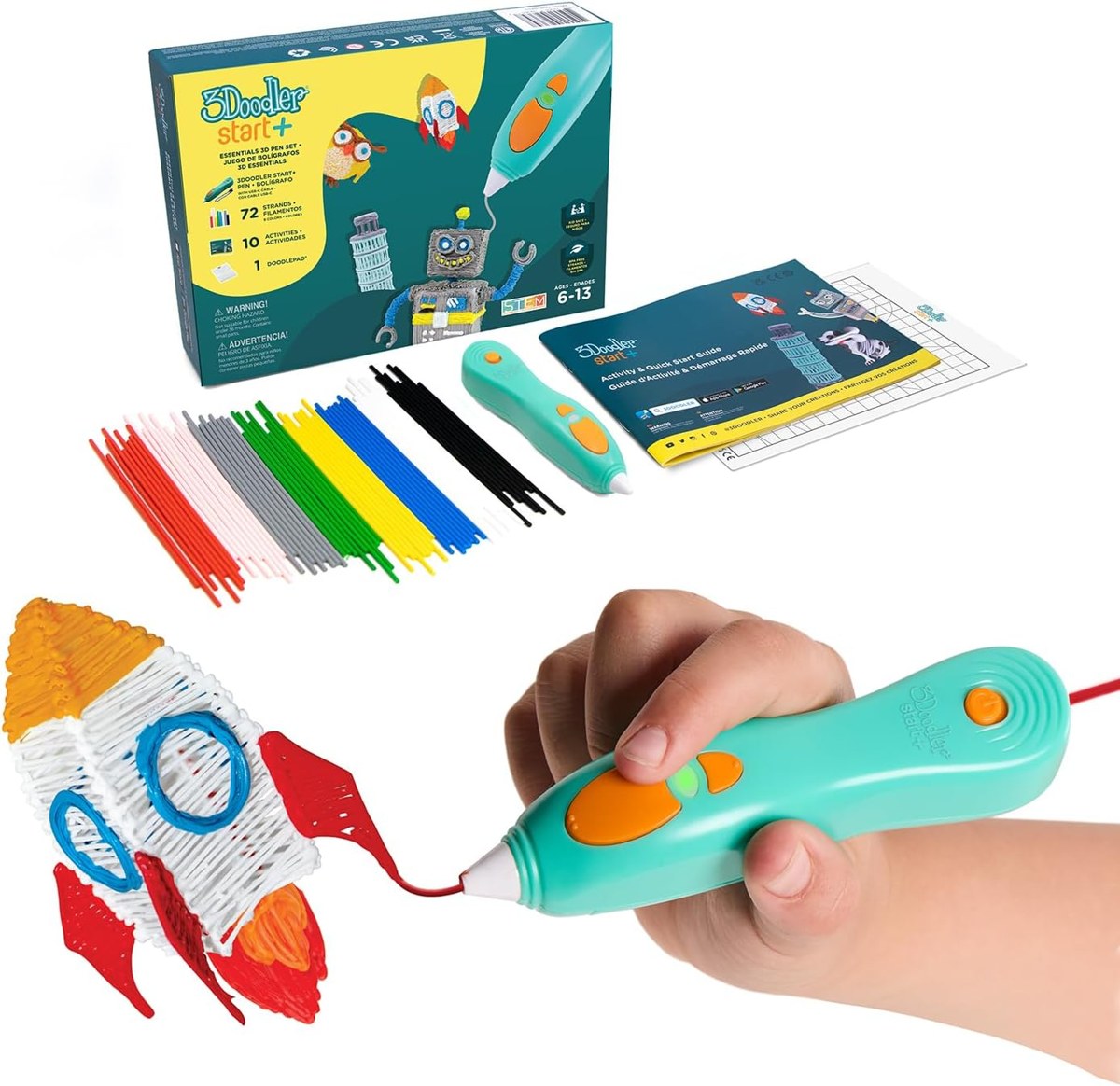
3D printing pen extruding plastic into a standing shape
Sun · Design

3Doodler Start+ 3D Pen

Ages 6+

The best iteration trainer we've found, because the cost of being wrong is a few centimetres of plastic. Engineering is mostly redoing something slightly better, and almost no toy lets a child redo cheaply enough to learn that. The real conceptual jump — and it takes a couple of weeks — is realising she has to build a flat base before she can build upward, because unsupported plastic droops. That's her discovering the need for scaffolding on her own.

What to ask: "Version two — what's the one thing you'd change?"

View on Amazon

Affiliate link · #ad

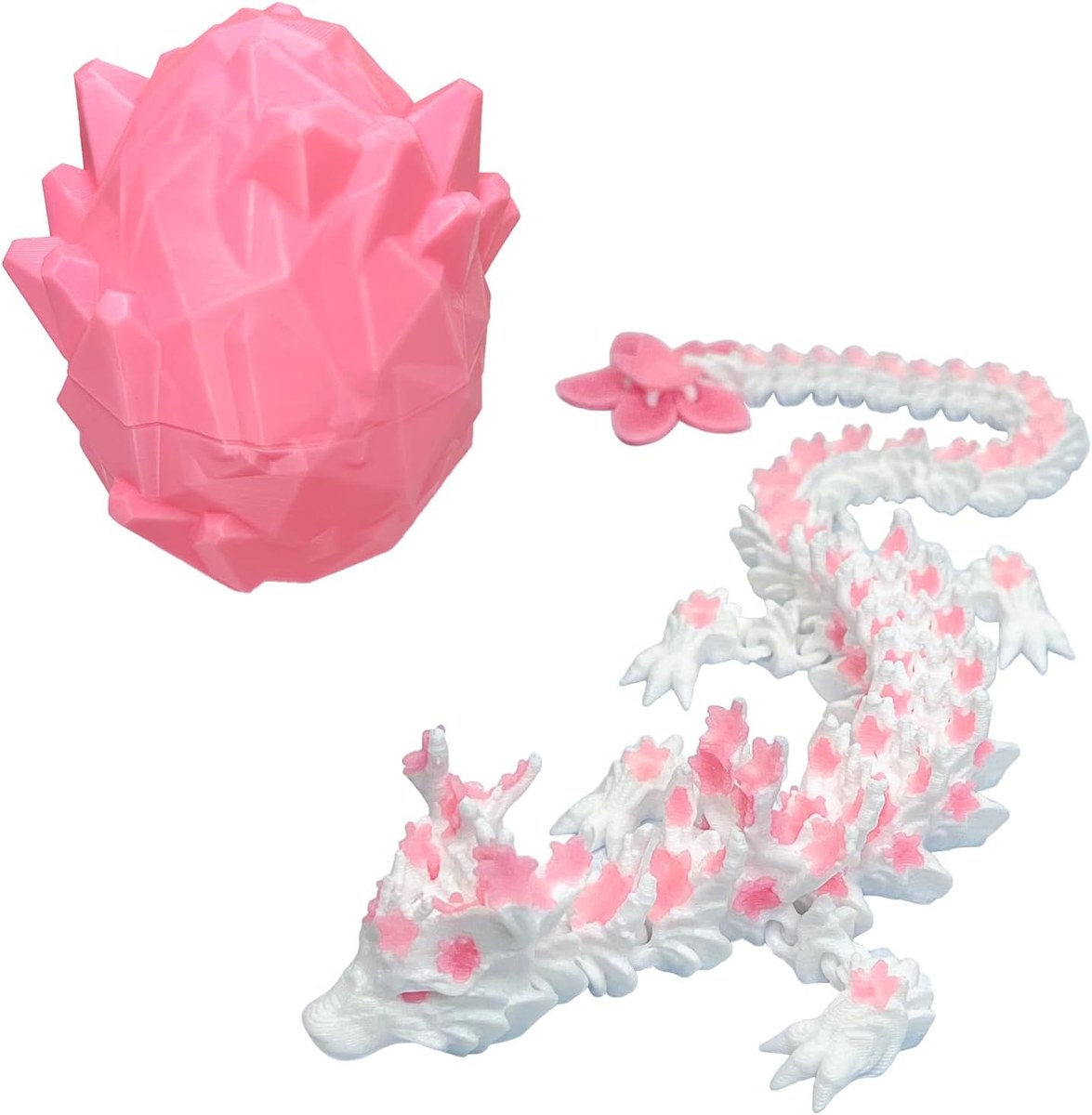
Articulated 3D printed dragon posed beside its crystal egg shell
Sun · Design

Dragon Egg with Articulated Dragon

Ages 6+

On this page as a manufacturing exhibit rather than a toy. It's print-in-place: the joints were never assembled, they were printed already interlocked, with deliberate gaps so the parts wouldn't fuse. Point that out once and a curious eight-year-old will spend a while turning it over looking for a seam that isn't there. It's the most direct route we've found to the question of how the thing in her hand was actually made — which is a question most toys actively hide.

What to ask: "Find the join. There isn't one — so how did it get made?"

View on Amazon

Affiliate link · #ad

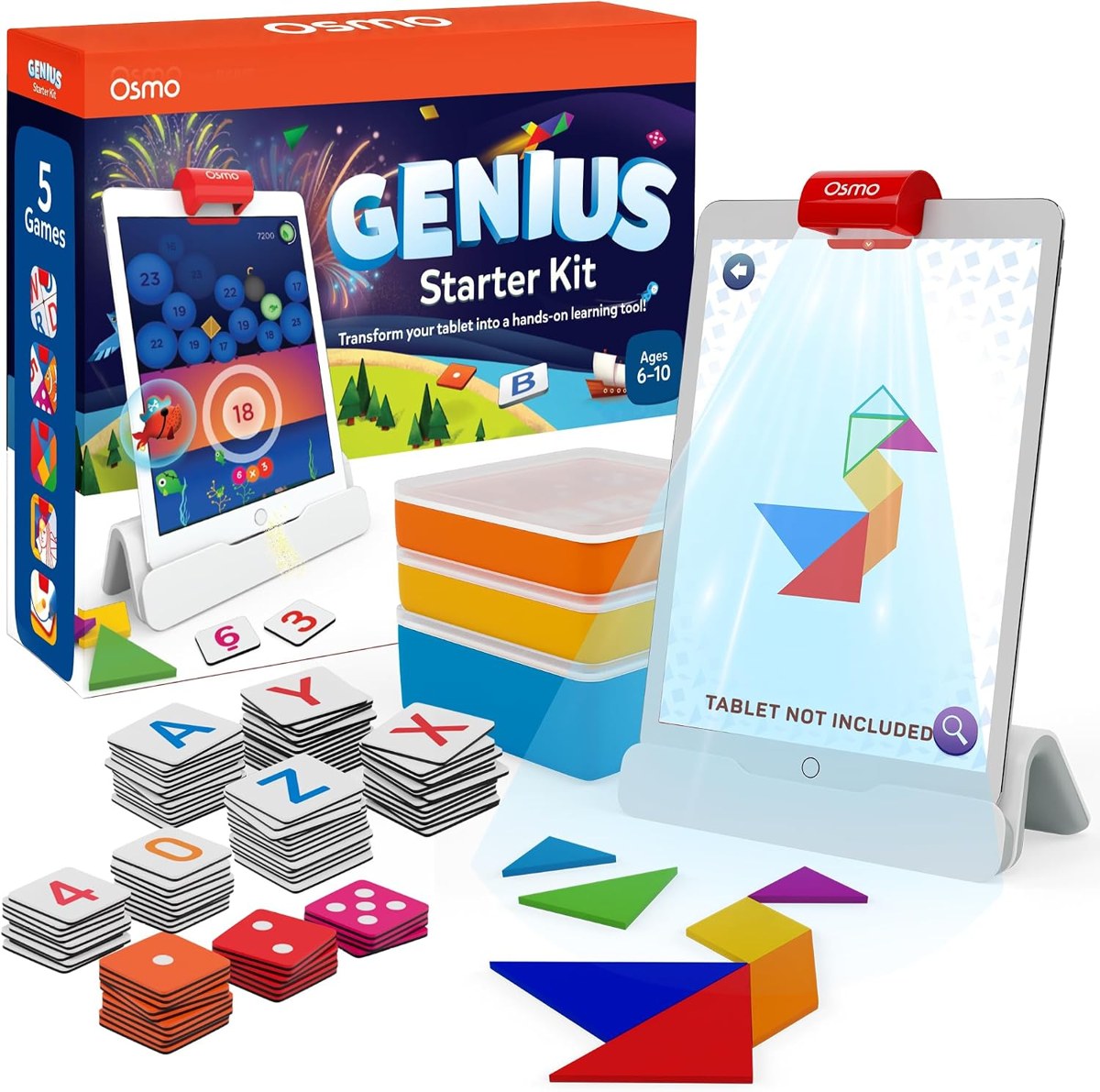
Osmo Genius tangible pieces arranged in front of a tablet screen
Sun · Maths & Logic

Osmo Genius Starter Kit

Ages 6–10

The maths and computational-thinking slot, and the honest description is high-quality drill with a good feedback loop rather than open-ended discovery. That's a real category and worth having — fluency has to come from somewhere, and it isn't going to come from the open-ended toys. The bit that's better than a worksheet is the immediacy: she's wrong, she knows within a second, she adjusts. Long feedback loops are why homework doesn't teach.

What to ask: Nothing. This is the one where you leave her alone.

View on Amazon

Affiliate link · #ad

Flight & sky — aerodynamics and astronomy

Things that leave the ground

The most technically demanding group here, and the one where the payoff is largest. Two of these need outdoor space and a tolerant neighbour.

LED flying orb hovering and spinning in mid-air
Sun · Aerodynamics

Flying LED Orb Ball

Ages 6+

A spinning object that resists being knocked off its axis and curves back toward the thrower — that's gyroscopic stability, and it's a concept almost impossible to explain and almost trivial to demonstrate. She will not use the word. She will absolutely develop an intuition that a fast-spinning thing behaves differently from a slow one, and the intuition arrives first. Best in a room with a high ceiling and nothing breakable at head height.

What to ask: "Throw it without any spin. Now with lots. What's different?"

View on Amazon

Affiliate link · #ad

Remote control foam airplane banking in flight
Sun · Flight

RC Foam Airplane

Ages 8–16

The most complete STEM object on this page, because it's the only one where several forces are in tension at once and she has to manage all of them live. Too slow and it stalls; too steep and it stalls differently. The gyro is doing some of the work, and the interesting conversation is precisely about which part it's doing and which part is her. Crashes are data. Treat the first ten as expected rather than as breakage and she'll keep flying.

What to ask: "What was the plane doing in the second before it went down?"

View on Amazon

Affiliate link · #ad

Star projector casting a field of stars across a dark ceiling
Moon · Astronomy

Galaxy Star Projector

Ages 2+

The softest inclusion here and deliberately so — nothing is being measured and no hypothesis is being tested. What it does is put an astronomy conversation in the room every single night for free, at the exact moment a child is horizontal, unhurried and prone to asking enormous questions. Half the scientists we know date the interest to a ceiling, a parent, and a question nobody could answer. Worth more than its category suggests.

What to ask: "How long do you think that light's been travelling?"

View on Amazon

Affiliate link · #ad

Reading the list by age

If you'd rather work from her age than from the concept, the rough ladder is this. Three to five is structures and forces — the ramp and the tiles, where the result is immediate and visible. Five to seven adds materials: the chemistry kit and the wall-climbing car, where she can start changing a variable on purpose. Six to nine is design and iteration, which is where the 3D pen and the print-in-place dragon do their work. Eight and up is the demanding end — the string loop and the aeroplane, both of which reward patience and punish rushing.

For the full age-banded versions of the same catalogue, there's 3–5, 6–8 and 9–12.

What we'd skip

Anything where the "experiment" has one answer. Covered above, but it's the most common failure and worth repeating. If the booklet knows how it ends, it's a recipe.

Coding toys that are mostly a screen. If the physical object is a shell around an app she could have downloaded, you've paid for plastic.

Kits with consumable materials and no refills. A brilliant activity that can be done four times is four activities. Check that it can be topped up before you buy it.

Microscopes and telescopes at the cheapest end of the range. The cheap ones show a blurry grey circle, and a child who has looked into one blurry grey circle has learned that science is boring. If it's not in budget to get a decent one, get something else this year.

The part that isn't a purchase

None of this works if the questions stop. The toy creates the moment; what happens with the moment is entirely down to whether there's an adult nearby who finds the answer genuinely interesting. You do not need to know any physics for this — you need to be willing to say "I don't know, how would we find out?" and then actually find out, badly, together, on a Saturday.

That's the whole method. Everything above is just an excuse to run it.

← Back to all Toy Picks