
Why the tiles matter more than the writing
A child can copy cat off a page without ever noticing it contains three sounds. Move a physical tile out of the middle box and drop a different one in, and the point becomes impossible to miss: the word changed because one sound changed, and everything else stayed put. That is the insight the whole of early reading rests on, and it is much easier to feel with your hands than to be told.
Change one thing at a time
The most valuable five minutes you can spend with these mats is a chain: build cat, swap the first tile for h, then swap the vowel for i, then the last tile for t. Say each new word as it appears. Children who can do this fluently — hearing which slot changed — are usually the ones who stop needing to sound words out at all a few months later. Every mat ends with a prompt to do exactly this.
What is on each mat
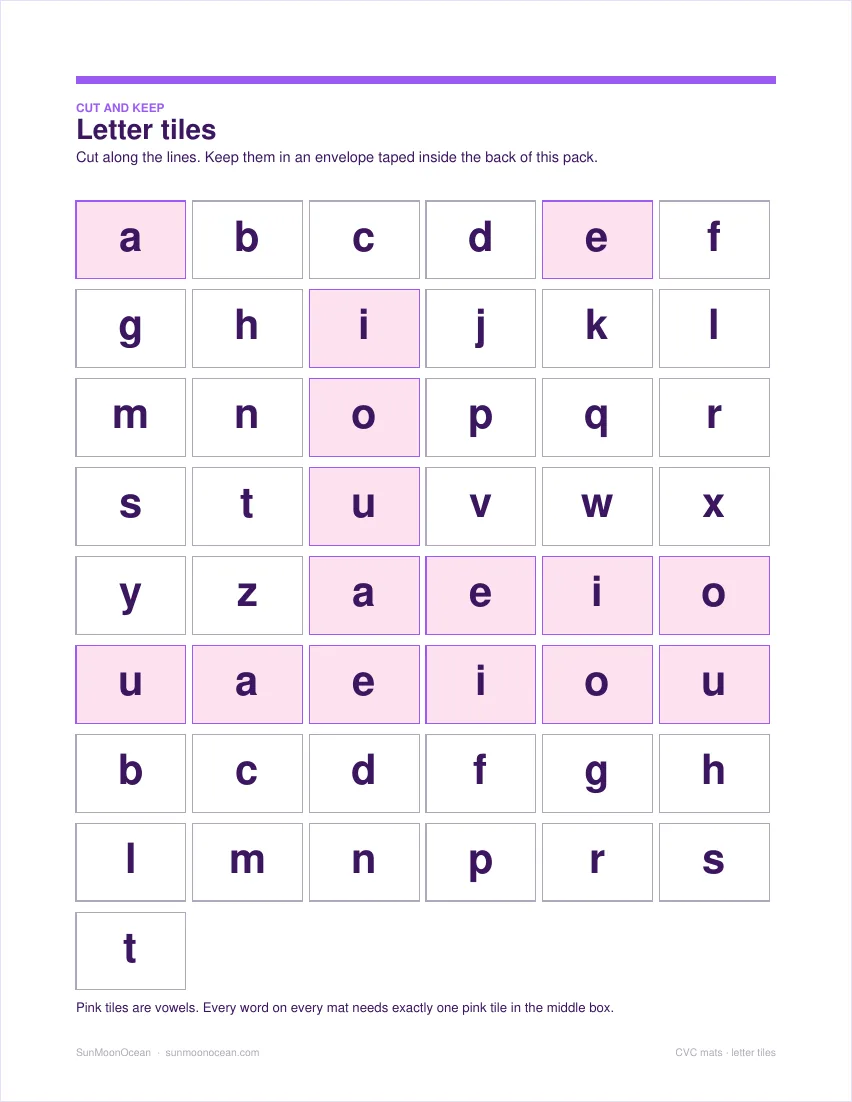
Three large boxes labelled first sound, middle sound and last sound, sized to hold the tiles from page two. Underneath, six words for that vowel with a row of small sound boxes and a line to write the finished word. Mats are grouped by vowel — two for short a, one for e, two for i, one each for o and u, and a mixed mat at the back once the individual sounds are secure.
A note on the tiles
Print page two on card if you have it, or laminate it if you are that sort of household. If you are not, plain paper is fine and letter tiles from any board game work just as well. Keep them in an envelope taped inside the back of the pack; the tiles going missing is the main reason this kind of resource stops getting used.