
The summer slide is a mileage problem
Children who read a little most days over a long holiday come back in September roughly where they left off. Children who read almost nothing for ten weeks come back measurably behind, and the gap widens every year it happens. Nothing in that requires a reading programme. It requires turning up, most days, for a short time — which is exactly the kind of thing a visible chart is good at.
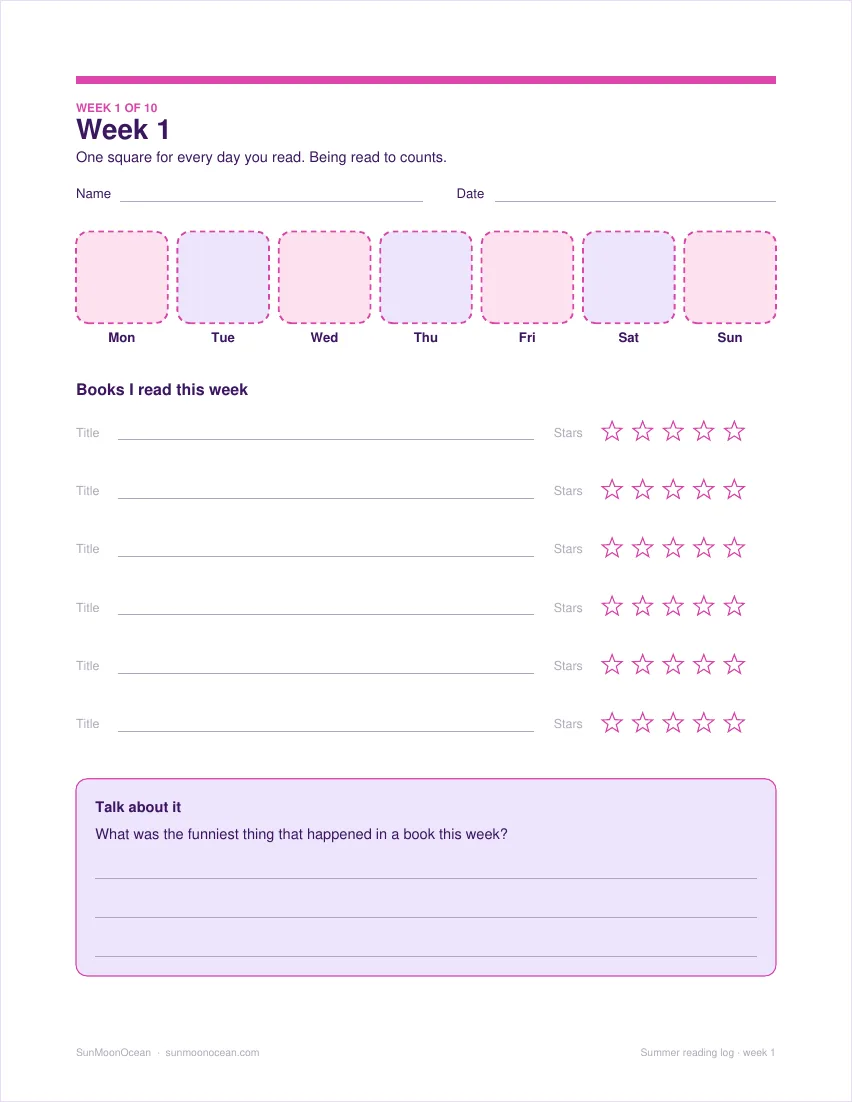
Being read to counts, and it counts the same
This is the rule most reading logs quietly get wrong. A five-year-old listening to a chapter book well above her own decoding level is building vocabulary, stamina and story structure — the things that determine comprehension later far more than decoding speed does. If she only ever fills a square because someone read to her, the log is still working exactly as intended.
Keep the bar embarrassingly low
Twenty minutes is the notional target and a bad day with four minutes still earns the square. The streak is worth more than the stopwatch, because the thing you are actually building is the habit of opening a book without being asked. A square is also just a square — a sticker, a felt-tip scribble, a drawing of the dog. It does not need to be a real sticker to work.
The page worth keeping
Behind the ten weekly pages is a single list where every finished book gets written down with a star rating, and behind that a certificate with a line for the best book of the summer and a space for a grown-up to sign. The weekly pages are disposable. The book list is the page children genuinely reread years later, so it is worth filling in properly.