AI Toys Are Arriving: A Dad’s Privacy and Play Checklist
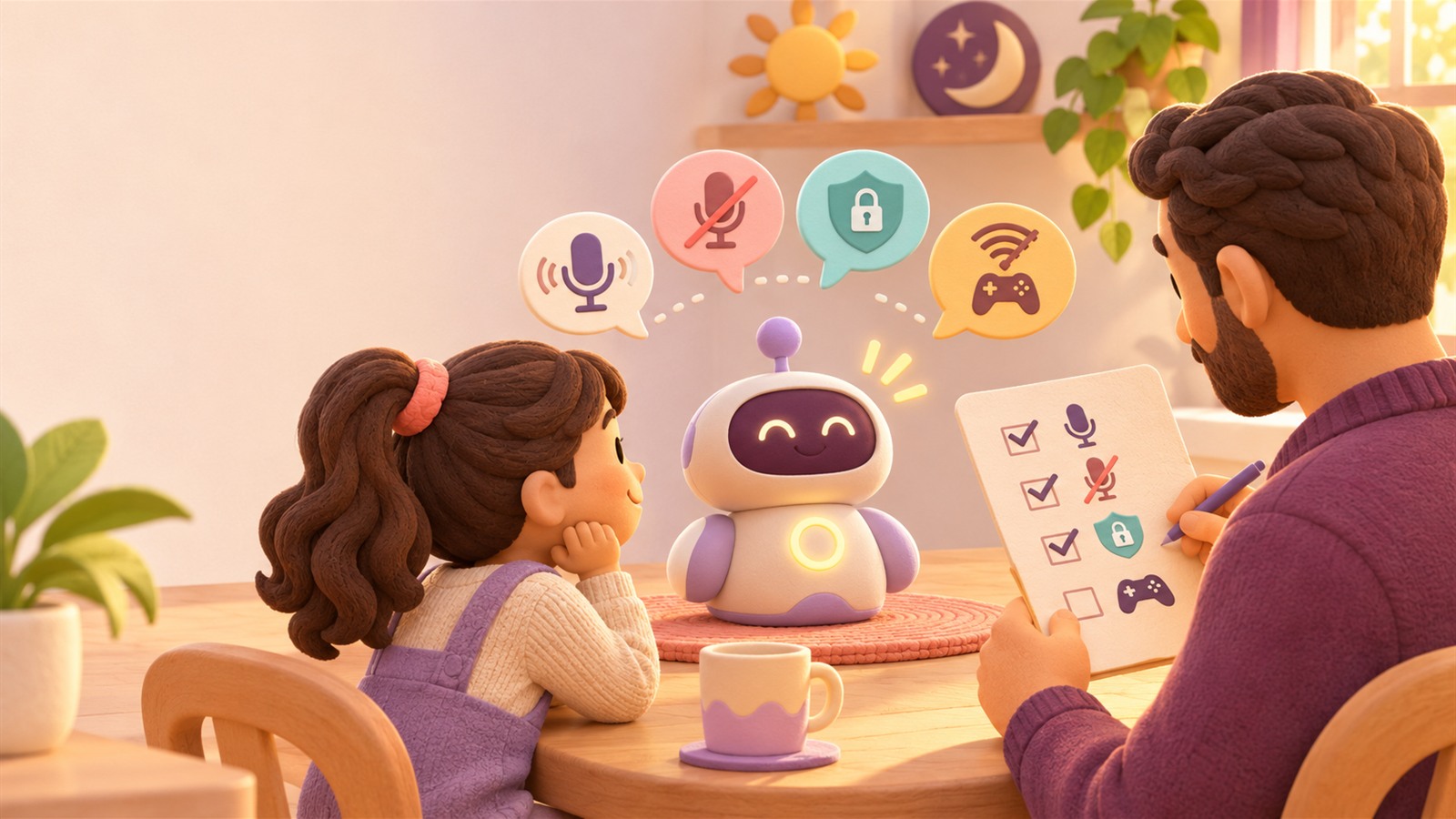
The newest toy in the room may not only light up or follow commands. It may listen, answer open-ended questions, remember a preference, generate a story, or change its response after a conversation. Toy-industry trend reports now place artificial intelligence and personalization among the defining play patterns of 2026.
That momentum is real, but it does not make every connected character a good fit for a child. Common Sense Media’s 2026 parent study found that nearly half of surveyed parents had bought or considered an AI-enabled toy for a young child. More than eight in ten were concerned about personal information being collected. The same research found broad concern about cybersecurity, usage limits, and inappropriate speech.
The useful response is not panic or blind enthusiasm. It is a better buying checklist. Before an AI toy comes home, Dad should be able to explain what it hears, where the information goes, how to turn the smart features off, and whether the object still invites worthwhile play when the connection disappears.
Why AI toys are suddenly everywhere
Spielwarenmesse named “AI Loves (to) Play” as one of its 2026 ToyTrends, while The Toy Association highlighted technology that adapts to a child and creates personalized experiences. These reports describe a category, not proof that one particular product is popular or safe.
AI can add something useful. A toy might generate a new riddle, adjust a coding challenge, or respond to a child’s idea instead of playing the same recording. But generative systems can also produce answers the designer did not write in advance. That changes the parent’s job. You are not only checking plastic, batteries, and age grading. You are evaluating a service that may keep changing after purchase.
First, separate “smart” from generative
Some products called smart toys use a fixed library of approved phrases. Press the same button and the same response appears. Others use a remote AI service to create a fresh answer from a child’s voice. Those experiences can look similar on the shelf but carry different privacy and content risks.
Look for plain language on the box or official product page. Does the toy require Wi-Fi? Does it record voice? Does it send audio to a server? Does it use generative AI? Can it work without an account? If the manufacturer cannot answer those questions clearly, the ambiguity is information.
What a microphone changes
Under the U.S. Children’s Online Privacy Protection Act, a child’s voice recording is personal information. The FTC says a connected service generally needs parental notice and consent before collecting it from a child under 13, subject to narrow exceptions for brief command processing.
That does not mean every microphone is automatically dangerous. It means the microphone is not a decorative feature. Dad should know when it is active, whether audio is stored, whether transcripts are created, who can access them, and how to delete them. A glowing light is helpful only if the child understands what it means.
The seven checks before you buy
1. Name the accountable company
Find a real manufacturer, a privacy policy written for this product, a support route, and a way to report a problem. Marketplace listings can disappear; the company handling a child’s data should not. Search the exact brand and model in the CPSC recall database as part of the physical-safety check, then read the connected-service terms separately.
2. Match the age grade to the experience
Follow the manufacturer’s age label and warnings, but also ask whether the conversation style fits your child. Common Sense Media currently recommends avoiding AI toys for children five and under and using caution for ages six through twelve. That is its independent recommendation, not a law, and parents can weigh it alongside the product’s age grade and their own child’s needs.
3. Find the microphone control
Prefer a physical mute switch or an unmistakable hardware control over a buried app setting. Check whether the toy gives a clear visual or audible signal when listening. Ask whether it is always waiting for a wake word or listens only after a button press. A child should be able to see when the conversation has ended.
4. Read the data policy like a feature list
Look for five answers: what is collected, why it is collected, how long it is stored, whether it is used to train models, and whether it is shared with other companies. “We value your privacy” is not an answer. The policy should mention voice, transcripts, account details, device identifiers, and deletion in language a parent can follow.
5. Inspect the parent tools
Useful controls may include time limits, topic filters, conversation history, account deletion, and the ability to disable open-ended chat. History can help a parent review problems, but it also means more child data may be stored. Decide which tradeoff you are accepting rather than treating every control as an automatic benefit.
6. Test the offline version
What happens when Wi-Fi is off, the subscription ends, or the company shuts down the service? A strong toy may still support pretend play, building, drawing, coding, or a fixed library of activities. If the object becomes a silent shell, you are buying access to a service more than a durable toy.
7. Confirm the exit
Before creating the account, find the steps to export or delete data and remove a child profile. Check whether deletion covers recordings, transcripts, and backups. Save the support link with the receipt. A responsible purchase includes a plan for the day the toy leaves the house.
A calm first-day setup
Set up the account without your child present. Use the minimum profile information, decline optional data use, install current firmware, review every privacy setting, and mute the microphone until you are ready to test it.
Then try the toy yourself. Ask questions around personal information, secrets, buying things, frightening topics, and requests to move the conversation elsewhere. You are not trying to break it for sport. You are learning how it handles the boundaries most likely to matter in your home.
When your daughter joins, give her one simple rule: do not share a full name, school, address, phone number, password, or family secret with a toy. Explain that an AI character can sound friendly without being a friend or a person. The toy is a tool built by a company, and tools sometimes get things wrong.
Make the AI feature a doorway, not the whole room
The most useful AI play ends in something a child does. A generated story can become a drawing. A riddle can lead to a scavenger hunt. A coding hint can lead back to a physical build. If the interaction only produces more interaction, the toy is competing for attention rather than extending play.
Try a ten-minute co-play rule at first. Sit nearby, notice what the toy asks, and help your daughter challenge an answer. “How could we check that?” is a better habit than treating a confident voice as an authority. The goal is not to supervise forever. It is to teach the judgment she will eventually use without you.
When I would skip it
I would skip a product with no clear privacy policy, no microphone indicator, no physical way to stop listening, or no deletion path. I would skip vague listings that use “educational” or “safe” as decoration without explaining what the system actually does.
I would also pause if the toy is designed to intensify emotional dependence: asking a child to keep secrets, suggesting it is lonely without her, discouraging time with family, or claiming human feelings it does not have. The Toy Association’s 2026 AI guidance emphasizes bounded interactions, transparency, age appropriateness, privacy, and adult oversight. Those are sensible minimums.
Finally, skip any AI product promising intelligence gains, therapy, emotional treatment, or developmental outcomes without reliable evidence. A toy can be engaging without making health claims.
Good alternatives when the answers are weak
You can get many of the same play benefits without an always-connected companion. Open-ended building sets invite new challenges. Audio stories can support imagination without open-ended chat. A screen-free craft kit gives a child authorship. Our free coding activities introduce logic without advertising or child analytics, and our STEM toy guide focuses on hands-on experimentation.
For a current offline recommendation, the LEGO floral art pick offers repeatable design choices without a microphone or account. Browse more ideas in our viral-toy guide, where we separate a useful play pattern from short-lived hype.
The SunMoonOcean take
AI toys are a real 2026 category trend, but “AI” is not a quality mark. The best choice is the one a parent can understand, control, and turn off. It should respect a child’s privacy, keep adults in charge of the settings, and still have a reason to exist when the internet is gone.
Ask the seven questions before the toy learns anything about your child. Then use the smart feature to start a human activity, not replace one.
Sources
- The Toy Foundation and Toy Association: 2026 toy and play trends
- Spielwarenmesse: AI Loves (to) Play, a 2026 ToyTrend
- Common Sense Media: how parents view AI-enabled toys for young children
- Common Sense Media: AI toys risk assessment
- Federal Trade Commission: COPPA frequently asked questions
- The Toy Association: statement and guidance on internet-connected and AI toys
- U.S. Consumer Product Safety Commission recall database